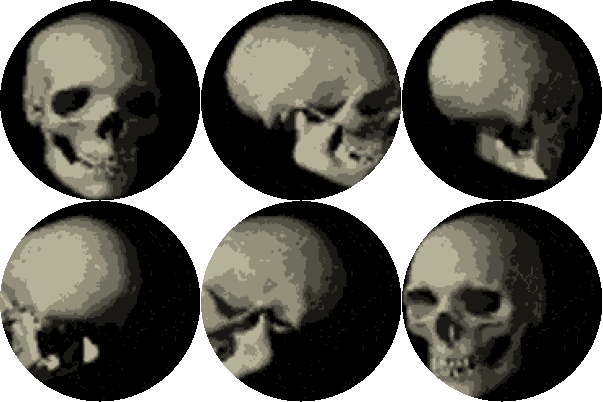


Journal Entry 18/10/2024
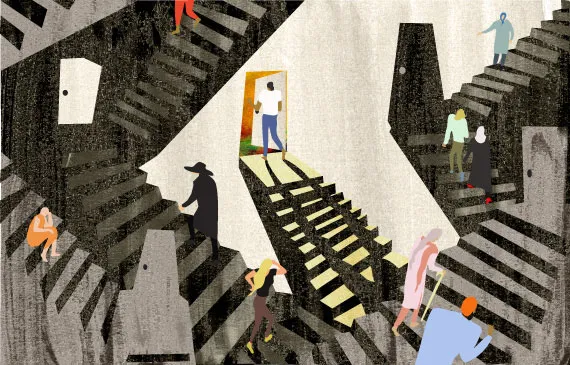 Photo credit: Ray Zim
I keep thinking about how different things might have been if humanity had never tried to go beyond the knowledge of ancient times, back when the first religious revelations were recorded. If we had stayed there, maybe the idea of a divine creator would feel simpler, easier to grasp. Maybe our purpose would feel clearer too. If science had never emerged, if no one had cared to understand the world in new ways, our relationship with God might have stayed… uncomplicated.
But we did explore. We did question. And as our understanding of the world grew, so did our awareness of how little we actually understood about God. Somewhere along the way, instead of accepting that our old interpretations were limited, we fractured. Some clung stubbornly to old teachings, unwilling to reconcile them with what we now know. Others rejected the very idea of a creator, seeing the old teachings as flawed or irrelevant. And somehow, in all of that, we lost sight of the fact that religion itself was meant to spark curiosity — curiosity about the world, about life, about the forces behind it all.
Now it feels like both the spiritual and the intellectual journeys matter. If a society’s understanding of God is incomplete or misdirected, it risks losing touch with a deeper sense of meaning.
I keep asking myself: how can we explain the universe — atoms, the emergence of order, the rise of life — if we insist that only certain teachings hold the full truth? How can we enjoy the marvels of the modern world, built on science and technology, if we treat them as irrelevant or sinful? And if we think our understanding of God is fixed, why even bother exploring the universe at all?
These questions feel basic, almost repetitive, but they keep coming back. How does intention emerge? How does life arise from non-life? How can zero be zero and one be one and yet patterns still form out of chaos?
For me, exploring these questions with an open heart and mind deepens my faith rather than weakening it. It doesn’t feel contradictory to accept the possibility of a Creator while still wanting to understand the world. On the contrary, it makes the signs of the divine feel more present — in nature, in science, in life itself.
To say religion is full of immoral or illogical rules feels to me like assuming our understanding of life is perfect. But it’s not. Our grasp of existence, morality, and even God has always evolved. To think we could ever reach a final, flawless understanding feels like denial.
If there’s so much we don’t understand about the universe, how can we confidently say we understand the one who created it? If we can’t fully grasp the technologies we use every day — our computers, our phones — why act like we can define what is or isn’t divine?
Faith, to me, is not certainty. It’s humility. It’s pursuing understanding while knowing we will never have the full picture. And the search itself — whether spiritual or scientific — has the power to bring us closer to something greater, to one another, and to a sense of meaning that’s bigger than any single person’s understanding.