


Journal Entry 29/10/2024
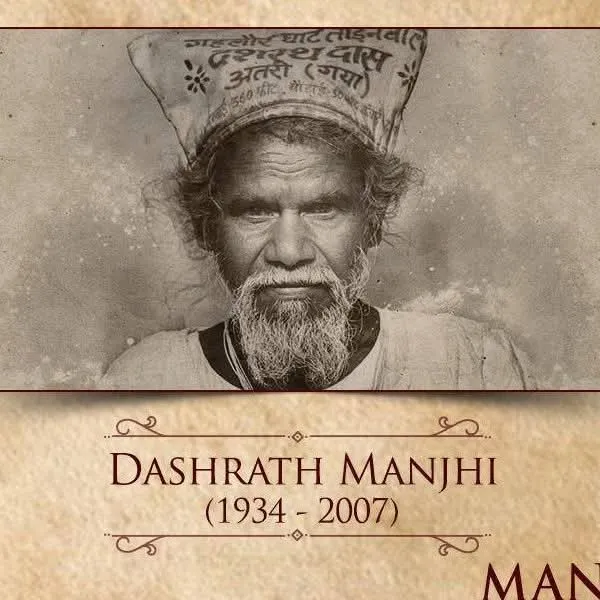
It sounds like a legend, the kind of story passed down through generations until the facts blur into myth. But the path through the Gehlaur hills is real, and so was the man who carved it. Armed with nothing but a hammer, a chisel, and a sense of purpose that outlasted the seasons, Dashrath Manjhi did what logic deemed impossible.
For twenty-two years, Manjhi was the only constant in that landscape. While the rest of the world moved toward modernization, he remained at the rock face, chipping away at the silence. He didn’t wait for a committee, a budget, or a miracle; he became the miracle. Each strike of his hammer was a refusal to accept a world where a mountain could stand between his people and their survival. This was a decades-long conversation between human bone and ancient stone, worked without the shield of machinery or the comfort of a safety net. To return to the same rock face every morning for eight thousand days requires a level of patience that borders on the divine. He looked at a mountain and saw a doorway.
Though his work was born from the personal tragedy of losing his wife, he did not build a monument to his grief. Instead, he built a solution for his community. His road did more than shorten a seventy-kilometer journey to a mere one kilometer; it proved that human agency is the most powerful tool on the planet. Manjhi’s life teaches us that grand change doesn’t always require a grand stage. It requires a singular vision and the quiet, relentless courage to remove the next stone.
Ultimately, Dashrath Manjhi’s life is a profound message of determination. He serves as living proof that the scale of a challenge is irrelevant if the will to overcome it is absolute. His legacy is not just the road he left behind, but the realization that no obstacle is truly permanent if someone is willing to stand before it and never walk away. He showed us that one person, fueled by a deep “why,” can reshape the world with nothing more than persistence and time.